

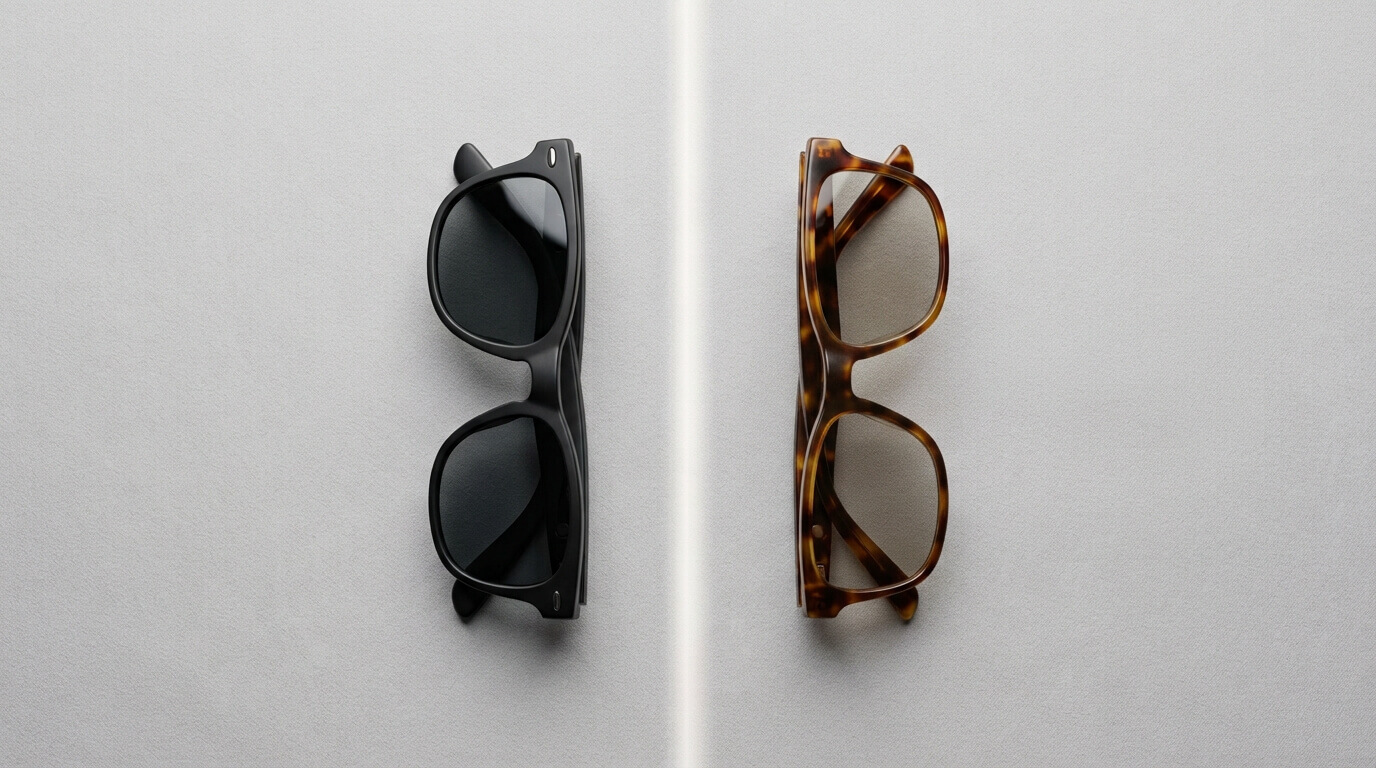
If you want smart glasses you can actually wear today, Ray-Ban Meta Gen 2 is the answer, it’s been shipping since September 2025, starts at $299, and has a proven 12MP camera with 3K video. Google’s Intelligent Eyewear, built with Samsung, Warby Parker, and Gentle Monster, doesn’t launch until fall 2026, and Google still hasn’t confirmed pricing.
The deeper question is which ecosystem you’re already living in. If your daily apps are WhatsApp, Instagram, and Facebook, Meta AI’s tight integration will feel natural immediately. If you’re a Gmail, Google Maps, and Android person, Gemini’s contextual reasoning is shaping up to be the more capable assistant on paper but it’s not in your hands yet.
Both pairs include cameras, both work with iPhone and Android, and both require you to keep a phone nearby for full functionality. Below is the full breakdown, feature by feature, so you can decide with real information instead of keynote hype.
1. What Is Google’s AI Smart Glasses?
Google unveiled its first true consumer smart glasses at Google I/O 2026 on May 19-20, branding the category “Intelligent Eyewear” rather than smart glasses. It’s not one product, it’s a platform, built on Android XR and engineered in partnership with Samsung, with frames designed by Warby Parker and Gentle Monster, and a Gucci collaboration through Kering Eyewear confirmed for 2027.
The glasses run Gemini as their core AI layer, activated by saying “Hey Google” or tapping the frame. Google demoed real capabilities on stage, not just concepts, including live object identification and Chinese-to-English translation during the keynote itself.
- Two form factors planned: audio-only glasses launching first, a display version to follow later
- Confirmed features include contextual visual awareness, direction-aware navigation, message summarization, and real-time translation
- Confirmed to work with both Android and iOS from launch a deliberate move to widen the buyer pool
- Price, exact release date, and battery specs remain unconfirmed as of mid-2026
2. What Are Meta Ray-Ban Glasses?
Ray-Ban Meta Gen 2 launched in September 2025 and has been sold continuously since, expanding in early 2026 with prescription-focused Blayzer and Scriber Optics frames. The standard Gen 2 starts at $299, with the prescription Optics line starting around $499.
The camera is the clear centerpiece: a 12MP ultra-wide lens capturing 3K video at up to 60fps, paired directly with Instagram and Facebook for fast sharing. A five-microphone array delivers strong call clarity, and Meta AI handles visual search, translation, and message summarization through the Meta View app.
- Available now in the US, Canada, UK, Australia, and several EU countries
- Battery: roughly 8 hours of active use, plus 48 additional hours from the charging case
- AI features lean on Meta’s own ecosystem, Facebook, Instagram, and WhatsApp integration is deep
- No in-lens display on the standard Gen 2; a separate $799 Ray-Ban Meta Display model adds one
3. Design and Wearability: Sunglasses-First vs Everyday-Glasses-First
This is where the two companies have made genuinely different bets. Meta built its glasses around the Ray-Ban Wayfarer silhouette, a shape tied closely to sunglasses and casual lifestyle wear.
Google is positioning its Intelligent Eyewear differently, aiming to work as a stand-in for everyday prescription glasses rather than an outdoor accessory. That distinction actually matters for people who already wear corrective lenses daily and aren’t looking to swap them for a sunglasses-first product every time they go outside.
- Ray-Ban Meta: casual, sunglasses-associated design, weighs about 50 grams
- Google Intelligent Eyewear: positioned toward all-day prescription wear via Warby Parker’s optometry background
- Neither has confirmed weight specs for Google’s version yet
- If you wear glasses daily already, Google’s approach is built with you specifically in mind
4. AI Brains: Gemini vs Meta AI
The AI engine is arguably the biggest real differentiator between the two, and it’s also the hardest one to judge fairly right now, since only one of them is actually shipping. Based on Google’s I/O 2026 demo, Gemini appeared more capable for complex, multi-step reasoning, contextual awareness, and translation range than Meta AI’s current implementation.
That said, Meta AI has almost two years of real-world refinement inside an actual glasses form factor, which counts for something demos can’t fully capture. Meta has also announced a shift toward a continuous, proactive AI mode rather than pure prompt-based interaction, which could close the capability gap significantly if executed well.
- Gemini’s on-paper ceiling looks higher based on demonstrated multi-step tasks and translation depth
- Meta AI’s practical, day-to-day performance is a known, tested quantity across real users
- Google’s implementation quality inside an actual glasses product remains an open question until launch
- Both assistants require an internet connection for most advanced features
5. Camera and Content Creation: Who Wins Right Now
If content creation and casual photo-taking matter to you, this category currently has one clear, working answer. Ray-Ban Meta Gen 2’s 12MP, 3K-capable camera with stabilization is a mature, independently reviewed piece of hardware that plugs directly into Instagram and Facebook sharing.
Google has confirmed its audio glasses include an embedded camera, but resolution, video quality, and stabilization details haven’t been disclosed. Until Google ships hardware that can actually be tested, Meta wins this specific category by default.
- Ray-Ban Meta: 12MP camera, 3K video at 60fps, 100° field of view, built-in stabilization
- Google: camera confirmed present, but specs remain unannounced
- Recording indicator LEDs exist on both, though visibility in low light has drawn scrutiny for Meta’s model
- Anyone prioritizing content creation should treat Meta as the safer bet today
6. Price, Availability, and the Buy-Now-vs-Wait Question
Money and timing are often the deciding factor, and right now they clearly favor Meta. Ray-Ban Meta Gen 2 is purchasable today at $299 for the standard model, with prescription Optics frames around $499.
Google hasn’t announced pricing, but industry estimates place the audio-only model somewhere between $299 and $499, putting it in roughly the same bracket as Meta’s lineup once it actually ships in fall 2026.
- Ray-Ban Meta: available now, in stores, across multiple countries
- Google: fall 2026 target, no confirmed date at the day level yet
- Estimated pricing overlaps significantly between the two brands
- If you need glasses now, this section alone settles the decision
7. Ecosystem Lock-In: Which Apps You’re Already Using
Smart glasses are only as useful as the apps and accounts behind them, and this is where your existing digital habits should weigh heavily on your decision. Meta’s glasses lean hard into Meta’s own ecosystem — Instagram, Facebook, and WhatsApp are the backbone of daily use.
Google’s Intelligent Eyewear draws instead from Gmail, Google Maps, Google Calendar, and Android integration broadly. Neither is a strict requirement both work across iPhone and Android but the deeper features noticeably favor users already inside each respective ecosystem.
- Heavy WhatsApp, Instagram, or Facebook user? Meta’s integration will feel immediately natural
- Heavy Gmail, Maps, or Android user? Gemini’s contextual features are built with you in mind
- Both brands support cross-platform use, so owning an iPhone doesn’t rule either option out
- Third-party app support (Uber, language-learning apps) has been demoed on Google’s side already
8. Privacy: What Both Companies Say About Cameras and Data
Camera-equipped glasses raise the same fundamental privacy question regardless of which logo is on the frame. Both Ray-Ban Meta Gen 2 and Google’s Intelligent Eyewear include built-in cameras, and both are, structurally, subject to the same institutional restrictions in places like courtrooms, hospitals, schools with testing policies, and secure corporate facilities.
Google has stated that sensitive actions across its broader Gemini products require explicit confirmation, and both companies use visible recording indicators when a camera is active. The core privacy variable in this category isn’t which AI brand you choose, it’s whether you’re comfortable with any camera-equipped wearable at all.
- Both devices include cameras and visible recording indicators
- Neither is appropriate for environments that prohibit recording-capable devices, regardless of brand
- Meta’s existing privacy documentation has drawn scrutiny around some data retention timelines
- If camera-based privacy concerns you specifically, that’s a hardware decision, not an AI-brand decision
9. Full Spec Comparison at a Glance
Numbers side by side settle more arguments than marketing language does. Here’s where things stand as of mid-2026.
Feature |
Google Intelligent Eyewear |
Ray-Ban Meta Gen 2 |
|---|---|---|
AI Engine |
Gemini |
Meta AI |
Availability |
Fall 2026 |
Available now |
Price |
$299-$499 (estimated) |
$299 standard, $499 Optics |
Camera |
Confirmed, specs unannounced |
12MP, 3K video, 100° FOV |
In-lens display |
None in first wave |
None standard; $799 Display model |
iPhone compatible |
Yes |
Yes |
Android compatible |
Yes |
Yes |
Real-time translation |
Yes |
Yes, 6+ languages |
Prescription lenses |
Warby Parker partnership (details pending) |
Yes, dedicated Optics line |
Battery life |
Not yet disclosed |
~8 hours active, +48 hours via case |
Real-World Examples
Here’s how these differences actually show up in daily situations people care about.
A frequent Instagram user documenting a trip reaches for Ray-Ban Meta Gen 2 today, capturing 3K clips and posting straight from the glasses without ever touching a phone. A Google Workspace user who lives inside Gmail and Google Maps decides to wait for Google’s Intelligent Eyewear instead, betting that deeper Gemini integration with tools they already use daily will outweigh a few extra months of waiting. A commuter who wants translation help while traveling checks both options and realizes either brand currently covers that need, making price and ecosystem the real tiebreakers rather than the translation feature itself.
- Content creators leaning social media: Ray-Ban Meta’s proven camera wins today
- Heavy Google ecosystem users: waiting for Gemini-native glasses may pay off
- Travelers needing translation: both brands currently deliver this reasonably well
- Budget-conscious buyers: Meta’s confirmed $299 entry point beats Google’s estimated range
Frequently Asked Questions
Which is better, Google AI Smart Glasses or Meta Ray-Ban? Neither is definitively “better” yet, since Google’s glasses haven’t shipped. Ray-Ban Meta Gen 2 is the proven, available option today, while Google’s Intelligent Eyewear shows a potentially more capable AI engine based on its I/O 2026 demo.
When will Google’s smart glasses be available? Google confirmed a fall 2026 launch window at Google I/O 2026, but an exact release date at the day level has not been announced yet.
How much will Google’s smart glasses cost? Google hasn’t disclosed pricing. Industry estimates place the audio-only model between $299 and $499, similar to Ray-Ban Meta’s existing price range.
Do Google smart glasses work with iPhone? Yes. Google confirmed cross-platform compatibility with both Android and iOS at the I/O 2026 announcement, matching Ray-Ban Meta’s existing iPhone support.
Does Ray-Ban Meta have a screen in the lens? The standard Gen 2 does not include a display. Meta sells a separate $799 Ray-Ban Meta Display model specifically for users who want an in-lens screen.
Is Gemini better than Meta AI for smart glasses? Based on Google’s I/O 2026 demo, Gemini appeared more capable for complex, multi-step tasks and translation range, but Meta AI has significantly more real-world testing inside an actual glasses product.
Are smart glasses with cameras safe for privacy? Both Google and Meta’s glasses include cameras and visible recording indicators, but neither is appropriate for environments that restrict recording-capable devices, such as courtrooms or secure facilities, regardless of brand.
Should I wait for Google’s glasses or buy Meta now? Buy Meta now if you want proven hardware, a strong camera, or deep Instagram and WhatsApp integration. Wait for Google if you’re heavily invested in Gmail, Maps, and Android, and value Gemini’s more advanced contextual reasoning enough to wait a few months.
The Bottom Line
Right now, this comparison has an asymmetry baked into it: one product exists, and one doesn’t yet. Ray-Ban Meta Gen 2 is a mature, tested, currently-shippable device with a genuinely strong camera and deep social integration. Google’s Intelligent Eyewear is a promising platform with a potentially stronger AI engine, backed by serious design partners, but it’s still a few months from actually reaching your face.
The honest advice is simple: if your daily digital life runs through Google’s apps and you can wait until fall, Gemini-powered glasses are worth holding out for. If you want something real today, or your life runs through Meta’s apps already, Ray-Ban Meta Gen 2 is the safe, proven choice.