

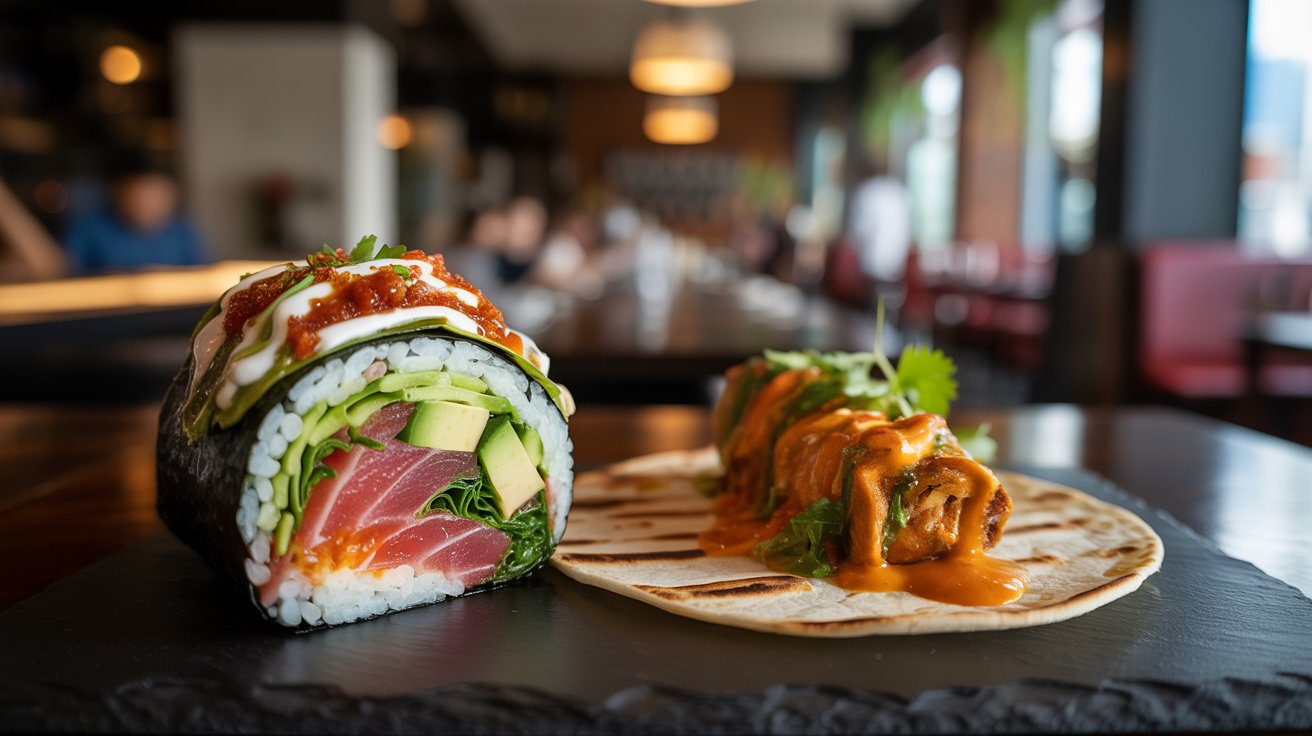
From Tikka Tacos to Sushi Burritos: How cross-cultural culinary innovation is redefining the American palate in 2026.
The New American Melting Pot 🍲
In 2026, the term “fusion” has evolved from a 90s gimmick into the backbone of modern American dining. It represents the artistic blending of culinary traditions, techniques, and ingredients to create something entirely new. Whether you are a food lover seeking the next viral bite, a chef pushing boundaries, or a restaurant owner looking to captivate a diverse audience, fusion is the ultimate language of flavor.
Top Fusion Food Trends in the USA
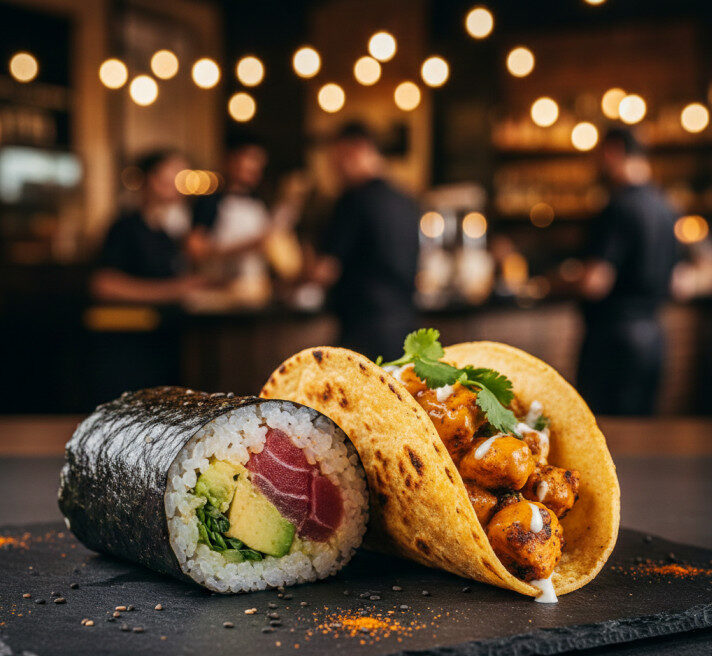
Tikka Tacos
The Mix: Indian Spices + Mexican Street Food Format.
Sushi Burritos
The Mix: Japanese Ingredients + Latin Handheld Concept.
K-BBQ Burgers
The Mix: American Beef Patty + Kimchi & Bulgogi Glaze.
Butter Chicken Pizza
The Mix: Italian Crust + North Indian Makhani Sauce.
Ramen Burgers
The Mix: Compressed Noodle “Buns” + Savory Meat Filling.
Masala Fries
The Mix: Belgian-style Fries + Indian Chaat Spices.
Why Fusion is Dominating the US Scene
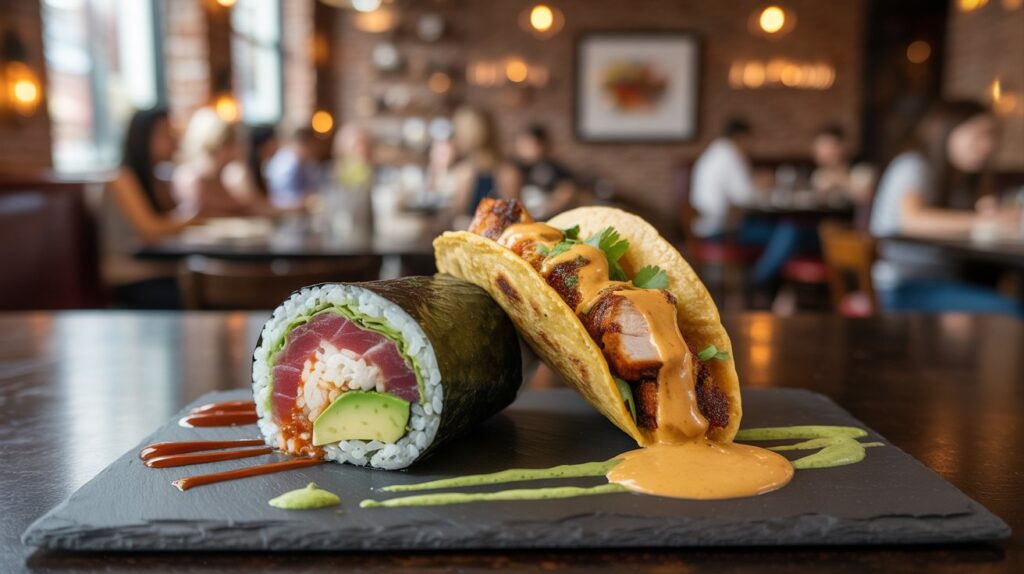
📱 The TikTok Effect
Visual appeal is currency. The “cheese pull” on a Bulgogi Philly Cheesesteak is engineered for viral success, driving Gen-Z diners to seek out “Instagrammable” meals.
🌍 Cultural Curiosity
Post-pandemic travelers want global flavors without leaving their zip code. Fusion provides a “safe” entry point into exotic cuisines through familiar formats like tacos or sliders.
🏙️ Urban Evolution
Street food has moved from the sidewalk to the white-tablecloth restaurant. Chefs are now using high-end techniques to refine “low-brow” fusion favorites.
Where You’ll Find Fusion Today
How to Engineer a Fusion Masterpiece
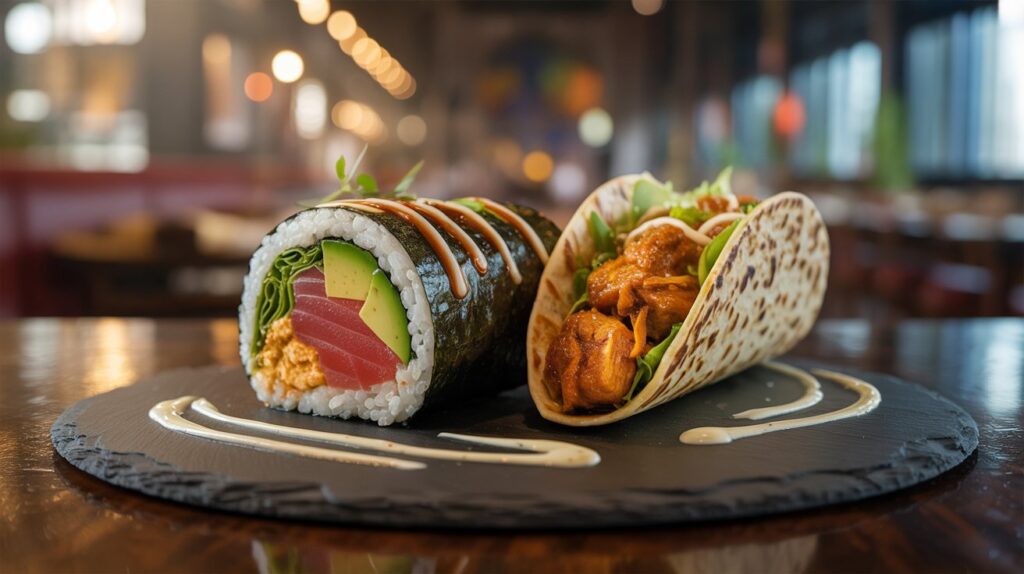
Identify a Logic Anchor
Start with a familiar format (Pizza, Taco, Burger) and swap one core component for a “surprise” element.
Balance the Five Tastes
Ensure your dish hits Sweet, Sour, Salty, Bitter, and Umami. Fusion often fails when one culture’s saltiness overpowers another’s spice.
The 70/30 Rule
Keep 70% of the dish familiar to your audience and 30% adventurous to avoid “flavor fatigue.”
Visual Presentation
Fusion is about contrast. Use vibrant colors (like purple pickled onions on yellow curry) to signal the mix.
Pros ✅
- Infinite Creativity: No “traditional” rules to break.
- Market Differentiation: Stand out in a crowded market.
- Viral Potential: Novelty drives social media sharing.
Cons ❌
- Authenticity Backlash: Purists may view it as “muddling” cultures.
- Complexity: Sourcing specialized ingredients can be costly.
- Flavor Clashes: High risk of “confused” palates.
Frequently Asked Questions
Q: What is the most popular fusion dish in the US?
Currently, the Sushi Burrito and Korean Tacos lead in terms of search volume and restaurant availability.
Q: Is fusion food healthy?
It depends! Fusion often introduces healthy elements like fermented vegetables (kimchi) or lean proteins (sashimi) into traditionally heavy formats.
Q: Is “fusion” a new concept?
No, food has always migrated. However, the 1980s saw the first formal “fusion” movement in California, while today’s version is much more street-food focused.
Q: How do I start cooking fusion at home?
Start simple. Try adding a Japanese Furikake seasoning to your popcorn or putting Italian pesto on a Mexican quesadilla.
Q: What is “Chaos Cooking”?
A sub-genre of fusion that intentionally pairs seemingly incompatible foods (like Pastrami Egg Rolls) for a maximalist flavor experience.
Q: Why do restaurants love fusion?
It allows them to charge a premium for “signature” items that competitors don’t have.
Q: Does fusion respect original cultures?
The best fusion chefs treat original recipes with respect, using their core techniques to build new bridges between cultures.
Q: Are there fusion desserts?
Yes! Examples include Miso Brownies, Matcha Croissants, and Gulab Jamun Cheesecake.
Q: What’s the next big fusion trend?
Keep an eye on Afro-Japanese fusion and Filipino-Mexican combinations.
Q: Can fusion cuisine be fine dining?
Absolutely. Many Michelin-starred restaurants in NYC and LA are built entirely on French-Japanese or Nordic-Mexican fusion.
Ready to Taste the Future? 🚀
Don’t miss out on the culinary revolution. Whether you’re dining out or cooking in, fusion is where the magic happens.