
In 2026, proposals are no longer just documents, they’re conversion assets. For freelancers and agencies competing in crowded digital markets, the proposal is often the first real “product experience” a client has with your business. Speed, clarity, personalization, and follow-up intelligence now matter as much as pricing.
Manual proposal creation is increasingly uncompetitive. Clients expect interactive pricing, instant acceptance, mobile-friendly layouts, and fast turnaround. Proposal software has evolved to meet these expectations, combining automation, analytics, AI-assisted writing, and payment workflows into a single system.
This 2026 guide breaks down the best proposal software for freelancers and agencies, explains how these tools actually improve win rates, compares leading platforms from multiple angles, and helps you choose the right option based on your workflow stage not just feature lists.
Why Proposal Software Matters More in 2026
Freelancers and agencies now operate in a buyer-driven market. Clients compare multiple providers quickly, skim proposals on mobile, and expect frictionless next steps.
Here’s why proposal software has become essential rather than optional:
-
Decision speed has increased: Many clients decide within hours, not days.
-
Remote-first selling is standard: Proposals replace in-person pitches.
-
Price transparency expectations are higher: Interactive pricing reduces back-and-forth.
-
Follow-ups are data-driven: Knowing when and where a client engages matters.
Expert insight: Agencies using proposal analytics consistently report better follow-up timing, which often matters more than proposal design itself.
What Modern Proposal Software Actually Automates (Beyond Templates)
In 2026, strong proposal tools do more than formatting:
-
Content reuse with logic (dynamic sections by service type)
-
Engagement tracking (view time, scroll depth, revisits)
-
Instant acceptance workflows (e-sign + payment)
-
Team governance (brand lock, approval flows)
-
AI-assisted drafting (especially for discovery-based proposals)
This automation reduces both time cost and error risk, especially for agencies handling multiple proposals weekly.
How We Evaluated the Best Proposal Software (2026 Criteria)
Each tool below was assessed using real freelancer and agency workflows:
-
Ease of use (learning curve under real deadlines)
-
Customization depth (branding + content flexibility)
-
Analytics usefulness (actionable vs vanity metrics)
-
Collaboration & permissions
-
Integrations (CRM, payments, accounting)
-
AI maturity (assistive vs gimmicky)
-
Pricing vs ROI (solo vs team economics)
-
User feedback trends (2024–2025)
Best Proposal Software for Freelancers & Agencies (2026)
1. Nusii
Best for: Solo freelancers & small agencies who value speed
Why it stands out in 2026:
Nusii remains one of the most frictionless proposal tools available. Its strength is not feature overload but repeatability. For freelancers sending similar proposals weekly, Nusii minimizes thinking time.
Key strengths
-
Clean editor with minimal setup
-
Strong content library for reuse
-
Client engagement tracking without complexity
-
Custom branding that doesn’t break layouts
Trade-off
-
Limited automation for complex sales workflows
Best use case
Freelancers offering standardized services (web design, SEO, consulting).
Pricing (2026)
-
Freelancer: ~$29/month
-
Agency: ~$49/month
2. Better Proposals
Best for: Agencies focused on design + conversion insights
Why it performs well
Better Proposals combines conversion-focused copy with engagement analytics. Its templates are written to sell, not just look good.
Key strengths
-
100+ conversion-optimized templates
-
Strong section-level analytics
-
E-signatures and payment integrations
-
CRM compatibility
Trade-off
-
Less layout freedom than web-based tools
Best use case
Marketing and growth agencies sending high volumes of proposals.
Pricing
-
Starter: ~$19/user/month
-
Premium: ~$29/user/month
3. Proposify
Best for: Mid-sized agencies with sales teams
Why it’s different
Proposify is built around process control. It solves the problem agencies face when sales, marketing, and leadership all touch proposals.
Key strengths
-
Centralized content governance
-
Role-based permissions
-
Interactive pricing tables
-
Detailed performance dashboards
Trade-off
-
Heavier onboarding than freelancer tools
Best use case
Agencies with multiple contributors and approval steps.
Pricing
-
Team: ~$49/user/month
4. Qwilr
Best for: High-end, design-forward proposals
Why Qwilr excels
Qwilr turns proposals into mini-websites, which significantly improves mobile experience and perceived value.
Key strengths
-
Web-native proposals (not PDFs)
-
Embedded video, visuals, calculators
-
Accept + pay inside proposal
-
Strong engagement analytics
Trade-off
-
Less traditional document control
Best use case
Creative agencies pitching premium or custom work.
Pricing
-
Business: ~$35/user/month
-
Enterprise: Custom
5. PandaDoc
Best for: Freelancers who want proposals + contracts + payments
Why it’s powerful
PandaDoc isn’t just proposal software, it’s document automation. In 2026, many freelancers prefer one tool instead of three.
Key strengths
-
Proposal, contract, and invoice workflows
-
E-signatures + in-document payments
-
Clause libraries and approvals
-
CRM and accounting integrations
Trade-off
-
Can feel heavy for simple proposals
Best use case
Consultants and service providers managing full client lifecycles.
Pricing
-
Essentials: ~$19/user/month
-
Business: ~$49/user/month
6. Proposally.ai
Best for: AI-assisted proposal drafting
Why it’s relevant in 2026
AI proposal tools have matured. Proposally.ai focuses on structured personalization, not generic AI copy.
Key strengths
-
AI-generated drafts based on inputs
-
CRM-linked personalization
-
Engagement scoring
-
Workflow automation
Trade-off
-
Requires review to maintain brand voice
Best use case
Freelancers who want speed without starting from scratch.
Pricing
-
Pro: ~$24/user/month
7. ClientPoint
Best for: Enterprise agencies & complex deals
Why it exists
ClientPoint handles high-value, multi-stakeholder proposals with deep CRM integration and advanced analytics.
Key strengths
-
Salesforce & HubSpot integration
-
Video introductions
-
Proposal lifecycle dashboards
-
Team collaboration at scale
Trade-off
-
Overkill for most freelancers
Pricing
-
Custom
Proposal Software Comparison Table (2026)
Software |
Best For |
Starting Price |
Key Advantage |
|---|---|---|---|
Nusii |
Freelancers |
$29/mo |
Speed & simplicity |
Better Proposals |
Conversion-focused agencies |
$19/mo |
Analytics-driven selling |
Proposify |
Sales teams |
$49/user |
Governance & control |
Qwilr |
Creative pitches |
$35/user |
Web-based experience |
PandaDoc |
All-in-one docs |
$19/user |
Proposals + contracts |
Proposally.ai |
AI drafting |
$24/user |
Fast personalization |
ClientPoint |
Enterprise |
Custom |
CRM-driven workflows |
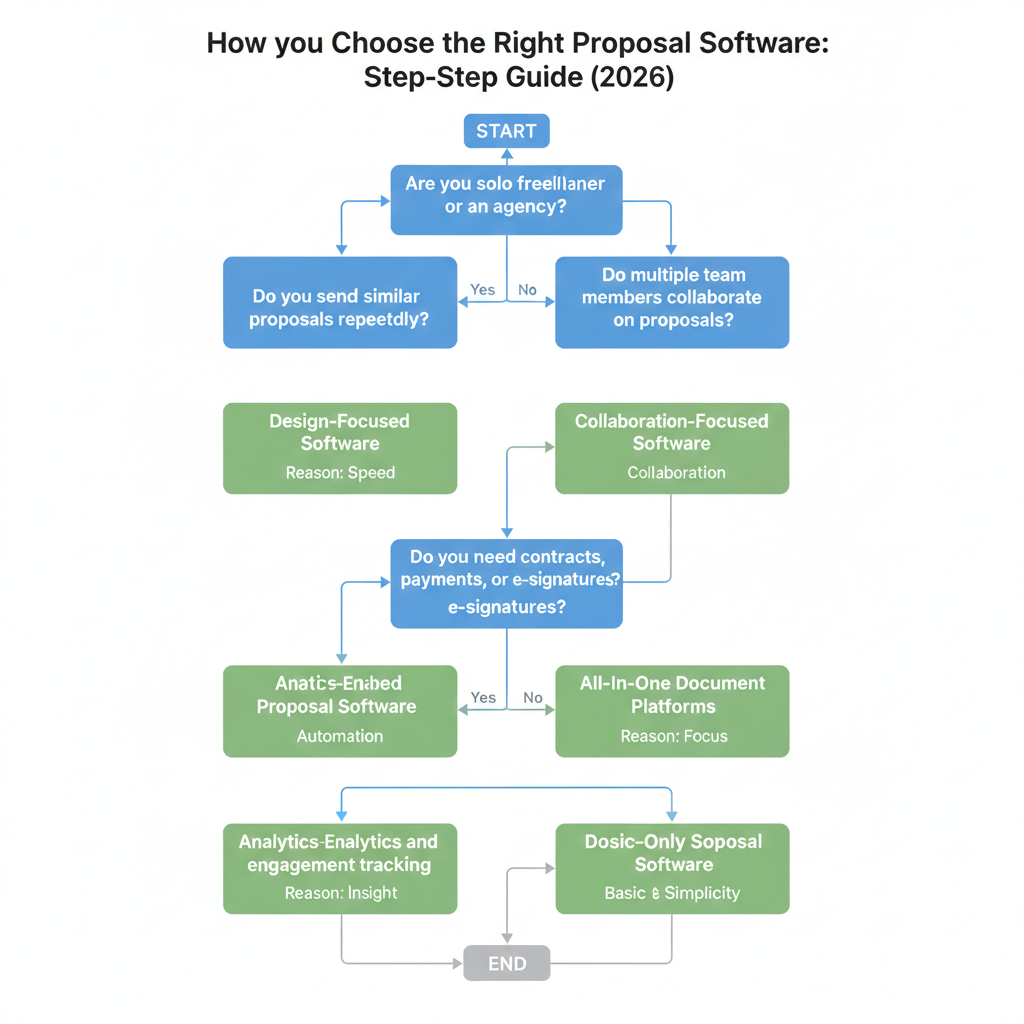
How to Choose the Right Proposal Software (Expert Framework)
1. Match Tool Complexity to Your Sales Process
-
Simple services → Nusii
-
High volume → Better Proposals
-
Team selling → Proposify
-
Premium pitches → Qwilr
2. Prioritize Analytics That Influence Action
Knowing when to follow up often beats rewriting proposals.
3. Consider ROI, Not Monthly Cost
Saving 4–6 hours per proposal quickly offsets most subscription fees.
4. Test With Real Client Scenarios
Use trials with actual proposals not demos.
Best Practices for Winning More Proposals in 2026
-
Lead with outcomes, not services
-
Use pricing tables instead of flat quotes
-
Optimize for mobile reading
-
Embed social proof near pricing
-
Use analytics-driven follow-ups
-
Reduce friction with instant acceptance
Frequently Asked Questions
Is proposal software worth it for freelancers?
Yes especially once you send more than 2–3 proposals per month.
Can proposal software replace contracts?
Tools like PandaDoc and Proposify can handle both.
Do clients care about interactive proposals?
Yes. Interactive elements improve clarity and perceived professionalism.
Is AI proposal writing reliable?
AI works best as a drafting assistant not a final author.
Final Verdict: Best Proposal Software in 2026
The best proposal software isn’t the one with the most features, it’s the one that matches your workflow maturity. Freelancers benefit most from speed and reuse. Agencies benefit from analytics, governance, and collaboration.
In 2026, proposals are no longer static documents, they’re conversion systems. Investing in the right software doesn’t just save time; it directly impacts close rates, client trust, and revenue predictability.