

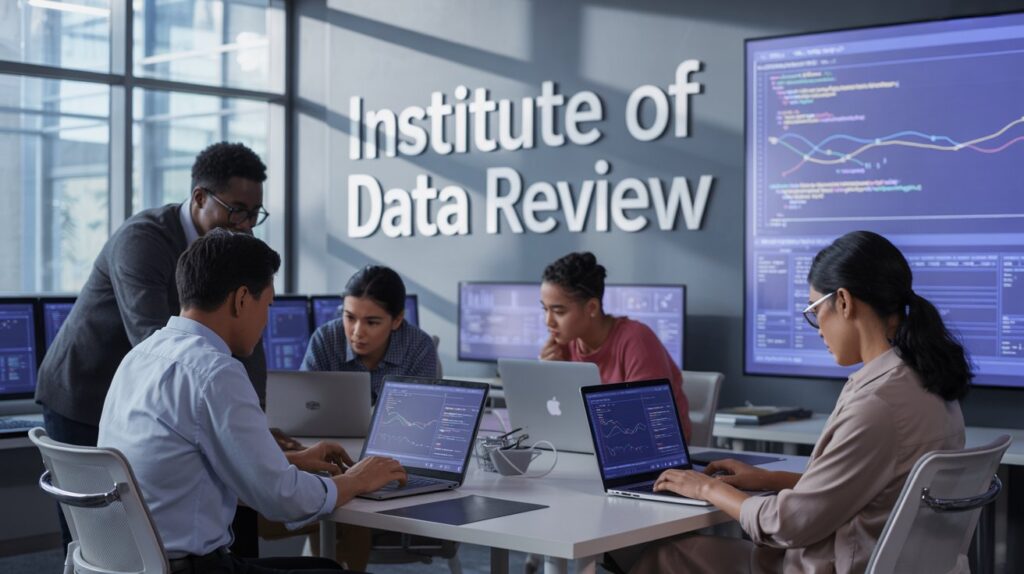
Choosing a data education provider in 2026 is no longer about simply “learning Python” or “getting into data science.” The market is crowded, expectations are higher, and employers now look beyond certificates to evaluate practical competence, project depth, and industry readiness.
This Institute of Data review goes deeper than surface-level descriptions. Instead of just listing courses, we analyze how the Institute of Data actually prepares students, where it stands out, where it doesn’t, and who it is genuinely best suited for.
If you’re considering a career move into data analytics, data science, or AI-related roles in 2026, this guide is written to help you make a strategic, informed decision.
What Is the Institute of Data and Why It Exists
The Institute of Data positions itself as a career-focused data education provider rather than a traditional academic institution. Its programs are designed primarily for:
-
Career switchers entering tech
-
Professionals upskilling into data roles
-
Learners seeking applied, job-aligned training
The key distinction is that the Institute of Data does not optimize for theory-heavy credentials. Instead, it focuses on hands-on, project-based learning aligned with how data teams actually operate in 2026.
This design choice explains both its strengths and its limitations.
Why Data Education Looks Different in 2026
Before evaluating the Institute of Data itself, it’s important to understand what changed in the data industry:
Key Industry Shifts (as of 2026)
-
Entry-level data roles now expect portfolio-ready projects
-
Employers value SQL + Python + business context more than abstract math
-
AI-assisted tools reduce manual coding but increase demand for data reasoning
-
Soft skills (communication, stakeholder framing) matter more than ever
The Institute of Data was built around these realities not outdated academic models.
Institute of Data Programs: What You Actually Learn
Rather than offering dozens of scattered courses, the Institute of Data focuses on structured career tracks.
Core Learning Areas
-
Data Analytics
-
Data Science
-
AI & Machine Learning foundations
-
Business intelligence and reporting
What matters most isn’t the topic list, it’s how learning is delivered.
How the Institute of Data Teaching Model Works
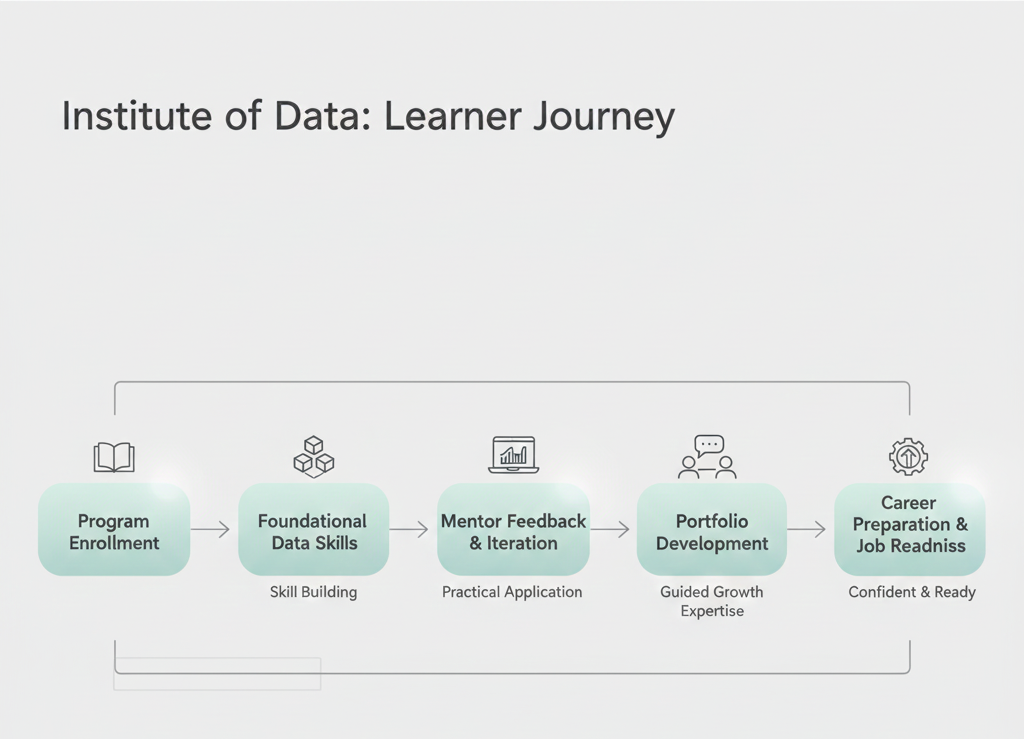
1. Project-First Learning (Not Theory-First)
One of the strongest aspects of the Institute of Data is its project-driven curriculum. Concepts are introduced because you need them to solve a problem not because they exist in a syllabus.
This mirrors real data work:
-
You encounter messy data
-
You clarify business questions
-
You decide which tools are appropriate
-
You explain results to non-technical stakeholders
This “why-first” approach leads to better retention and job readiness.
2. Structured Mentorship Instead of Passive Content
Unlike self-paced platforms, Institute of Data programs emphasize:
-
Live instructor sessions
-
Mentorship feedback on projects
-
Group-based collaboration
In 2026, this matters because:
-
AI tools can answer syntax questions instantly
-
What learners need is judgment, feedback, and context
Mentorship fills that gap.
Institute of Data vs Other Learning Options (2026 Comparison)
Institute of Data vs University Degrees
Factor |
Institute of Data |
University Degree |
|---|---|---|
Time Commitment |
Shorter, focused |
Multi-year |
Cost Structure |
Lower overall |
High tuition |
Practical Skills |
High |
Varies |
Theory Depth |
Moderate |
High |
Career Switching Speed |
Fast |
Slow |
Insight:
University programs are still valuable for research or advanced theory. Institute of Data is better suited for practical career transitions.
Institute of Data vs Online Course Platforms
Factor |
Institute of Data |
Self-Paced Platforms |
|---|---|---|
Accountability |
High |
Low |
Feedback Quality |
Human-led |
Minimal |
Portfolio Development |
Guided |
DIY |
Completion Rates |
Higher |
Often low |
Insight:
Many learners fail not due to lack of content, but lack of structure. Institute of Data solves that problem.
Career Outcomes: What Graduates Are Actually Prepared For
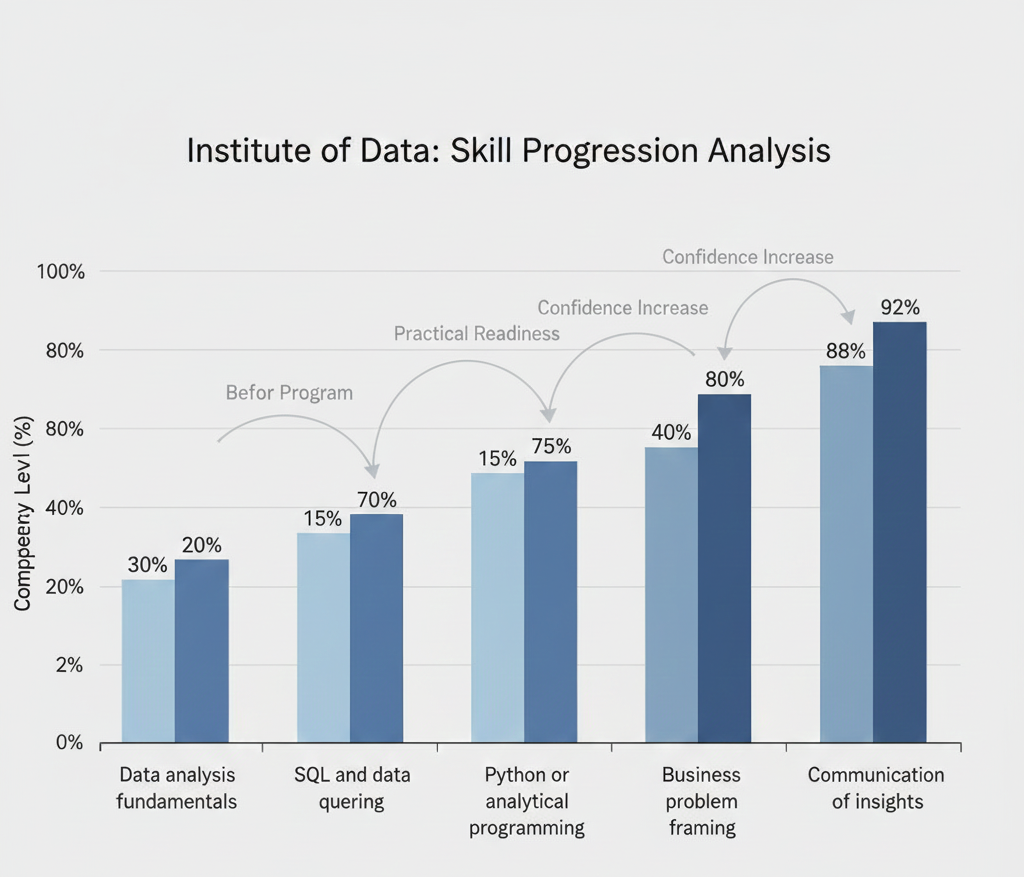
Based on curriculum design and outcomes alignment, Institute of Data graduates are typically prepared for:
-
Junior Data Analyst roles
-
Business Intelligence Analyst positions
-
Entry-level Data Scientist roles (with continued learning)
-
Analytics-focused consulting or operations roles
What It Does Not Guarantee
-
Immediate senior-level roles
-
Deep research-oriented data science positions
-
Academic or theoretical specialization
This honesty is important and often missing from other reviews.
Strengths of the Institute of Data (2026 Perspective)
Career-Relevant Curriculum
The curriculum evolves with industry tools and workflows, not static textbooks.
Strong Portfolio Emphasis
Graduates leave with demonstrable projects, not just certificates.
Instructor-Led Accountability
This dramatically increases completion and confidence.
Global Accessibility
Online delivery allows participation regardless of location.
Limitations You Should Consider
Not Ideal for Absolute Beginners Without Commitment
While beginner-friendly, success requires time discipline and motivation.
Limited Advanced Research Depth
Those seeking heavy mathematical or academic depth may find it insufficient.
Intensity Can Be Challenging
Fast-paced learning isn’t ideal for everyone.
These aren’t flaws, they’re trade-offs.
Who Should Enroll in the Institute of Data in 2026?
Best Fit For:
-
Career switchers from non-tech fields
-
Professionals moving into analytics roles
-
Learners who want structure and mentorship
-
People building a data portfolio quickly
Not Ideal For:
-
Learners seeking purely academic theory
-
Those unwilling to commit consistent time
-
Individuals expecting instant job placement without effort
Questions People Commonly Ask About the Institute of Data
Is the Institute of Data worth it in 2026?
If your goal is practical employability, yes provided you engage fully.
Is it better than self-learning?
For most learners, yes. Structure and feedback outperform unstructured self-study.
Do employers recognize the Institute of Data?
Employers care more about skills and projects than institution names and that’s where this program focuses.
Can I work full-time while studying?
Many do, but time management is critical.
Final Verdict: An Honest 2026 Institute of Data Review
The Institute of Data succeeds because it aligns with how data careers actually work in 2026. It doesn’t promise shortcuts or hype outcomes. Instead, it offers:
-
Structure
-
Mentorship
-
Practical skill-building
-
Career-aligned projects
For motivated learners who want to do data work not just talk about it, the Institute of Data remains a strong, realistic option in an increasingly noisy education market.