
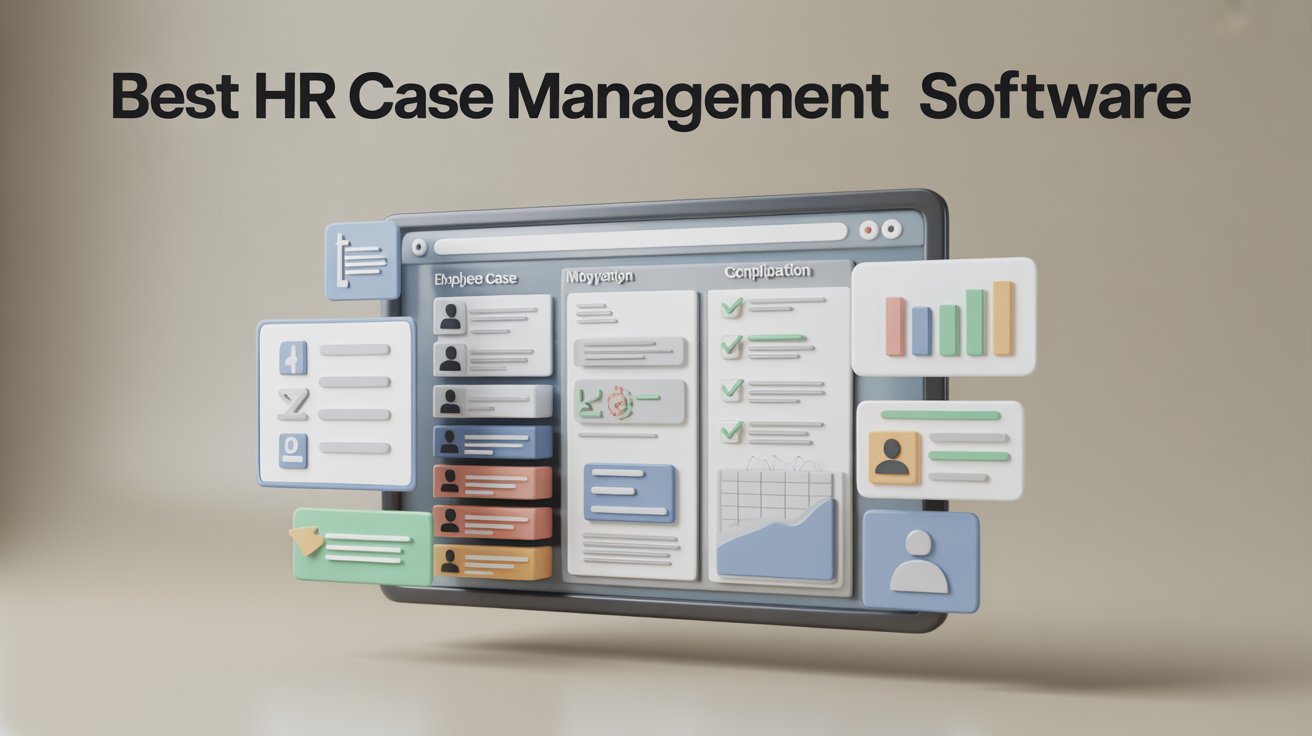
Employee relations in 2026 are no longer just an HR responsibility, they’re a legal, reputational, and cultural risk area. Hybrid work, AI-assisted hiring, stricter labor regulations, and rising employee awareness mean HR teams must resolve issues faster, more consistently, and with defensible documentation.
From grievances and misconduct investigations to accommodations, whistleblowing, and extended leave cases, HR case management software has become a core HR technology ot an optional add-on.
This guide analyzes the best HR case management software in 2026, focusing on how these platforms work, why they reduce risk, and which organizations benefit most.
What Is HR Case Management Software (Why It Matters More in 2026)
HR case management software is designed to systematically manage non-routine employee issues, the kinds of situations most likely to escalate into disputes, audits, or lawsuits.
In 2026, these tools matter more because:
-
Employment laws are stricter and faster-changing
-
Remote & global teams require standardized handling
-
Regulators expect clear investigation trails
-
Employees expect transparency and fairness
-
AI-assisted HR decisions require auditability
Unlike traditional HRIS systems, case management platforms focus on:
-
Structured investigations
-
Consistent decision-making
-
Time-stamped documentation
-
Risk and trend analysis
How We Evaluated These Tools (2026 Criteria)
Each platform below was assessed on information gain, not marketing claims:
-
Investigation depth & structure
-
Automation vs human oversight
-
Compliance & defensibility
-
Analytics and trend detection
-
Scalability by company size
1. HR Acuity — Best for Compliance, Investigations & Risk Reduction
Best for: Mid-to-large organizations, regulated industries
HR Acuity remains the industry benchmark for employee relations and investigations in 2026. Its strength lies in standardizing how HR decisions are made, not just how cases are logged.
Why it’s different:
-
Guided investigation frameworks reduce bias
-
Severity scoring prioritizes high-risk cases
-
Benchmarking compares your ER data with industry trends
Why this matters:
Inconsistent handling is one of the biggest legal risks in HR. HR Acuity minimizes this by enforcing process discipline.
2. Dovetail Software — Best for High-Volume HR Operations
Best for: HR teams handling large numbers of cases
Dovetail focuses on speed, visibility, and workload control. Its dashboard-centric design allows HR teams to see bottlenecks instantly.
Key advantage:
-
Unified HR case dashboard
-
Immediate access to employee HCM data
-
Prevents duplicate or conflicting cases
Expert insight:
Dovetail is especially effective where HR responsiveness directly impacts employee trust (retail, healthcare, education).
3. LaborSoft — Best for Labor Relations & Unionized Workforces
Best for: Organizations with unions or complex labor agreements
LaborSoft specializes in labor relations case management, not generic HR workflows.
Why it stands out:
-
Centralized incident, employee, and case tracking
-
Strong policy enforcement
-
High data security and redundancy
Why it matters in 2026:
Labor disputes are rising globally, and documentation errors are costly. LaborSoft minimizes procedural mistakes.
4. Sunrise HRCM — Best for HR Shared Services & Workflow Automation
Best for: HR shared services models
Sunrise HRCM excels at service delivery and workflow automation, helping HR teams handle recurring cases efficiently.
Core strengths:
-
End-to-end workflow automation
-
Trend recognition over time
-
Consistent advice delivery
This platform works best when HR acts as a service center, not just a compliance function.
5. Ciphr — Best for Secure Case Tracking & Compliance Reporting
Best for: UK/EU organizations with compliance needs
Ciphr emphasizes secure recordkeeping and reporting accuracy, making it ideal for audit-heavy environments.
Why HR teams choose Ciphr:
-
Detailed case histories
-
Pattern tracking to prevent repeat issues
-
Strong GDPR-aligned data handling
6. Neocase HR — Best for HR Service Automation at Scale
Best for: Large enterprises optimizing HR efficiency
Neocase reduces administrative burden through process automation and self-service.
Key value:
-
Automates repetitive HR tasks
-
Frees HR staff for strategic work
-
Improves employee experience through personalization
7. Zoho People — Best Affordable HR Case Management Tool
Best for: Small to mid-sized businesses
Zoho People offers strong case management at a lower price point, making it accessible without sacrificing usability.
Why SMBs choose it:
-
Centralized inquiry management
-
Knowledge base reduces repeat questions
-
Remote-friendly access
8. Infor HCM — Best for Enterprise Self-Service at Scale
Best for: Global enterprises
Infor enables employees to resolve over 70% of HR inquiries independently, significantly reducing HR workload.
Why it works:
-
Multi-tier service delivery
-
Strong integration with enterprise HR systems
-
Cost-efficient at scale
9. Workpro HR — Best for Fair & Consistent Case Handling
Best for: Organizations prioritizing procedural fairness
Workpro emphasizes accurate documentation and consistent treatment, crucial for disciplinary and grievance cases.
10. ServiceNow HR — Best for Enterprise Integration
Best for: Organizations already using ServiceNow
ServiceNow excels when HR case management is part of a broader IT and operations ecosystem.
Advantage:
-
Unified case tracking
-
Knowledge-driven responses
-
Strong analytics across departments
Comparison Snapshot (2026)
Best For |
Tool |
|---|---|
Investigations & compliance |
HR Acuity |
Automation & speed |
Dovetail, Neocase |
SMB affordability |
Zoho People |
Labor relations |
LaborSoft |
Enterprise scalability |
Infor HCM, ServiceNow |
Key HR Case Management Trends in 2026
-
AI-assisted case categorization (human-reviewed)
-
Predictive risk analytics
-
Greater audit transparency
-
Employee-facing case visibility
-
Integration with DEI & compliance reporting
Final Verdict
In 2026, HR case management software is no longer about tracking issues, it’s about protecting organizations while treating employees fairly.
The right platform helps HR:
-
Reduce legal risk
-
Make consistent decisions
-
Build employee trust
-
Operate efficiently at scale
Choosing the wrong tool or relying on spreadsheets, can be far more expensive than investing in the right system.