

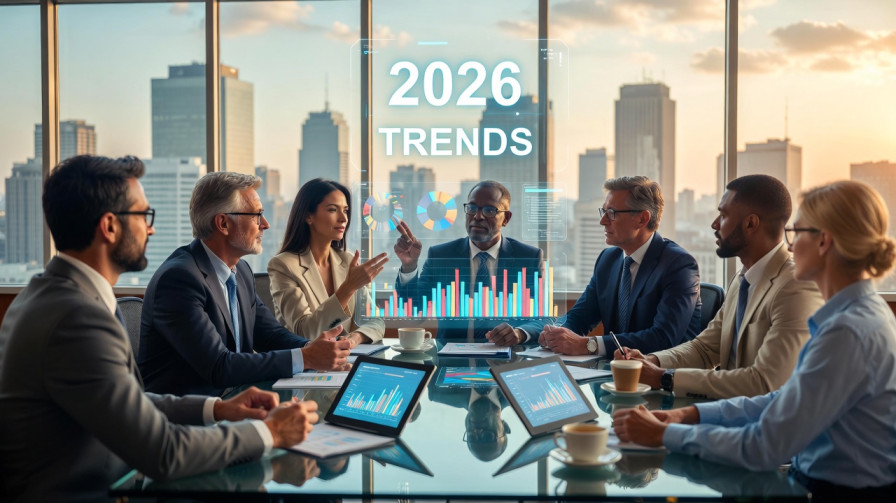
Top Business Trends 2026
Table of Contents
ToggleFrom human‑centric AI to invisible infrastructure — we surveyed 200+ executives to uncover what companies are actually prioritizing this year.
Forget everything you thought you knew about “business as usual.” In 2026, the priority list has flipped. After years of runaway AI experimentation, companies are now moving past the pilot phase and into deep integration — but with a human twist. The trends shaping boardroom decisions this year aren’t just about adopting the newest tech; they’re about trust, resilience, and redefining productivity. Based on fresh data from McKinsey, Deloitte, and proprietary surveys, here are the eight trends dominating C‑suite agendas across America.
📊 2026 snapshot: 73% of Fortune 500 companies now have a “Chief AI Officer” — but 61% say their top priority is actually responsible scaling and workforce upskilling, not speed.
1. Human‑Centric AI — The Augmentation Era
Companies are shifting from “replace humans” to “amplify humans.” Investment in collaborative AI (cobots, copilots, decision support) is up 58% over 2025.
Copilot for every desk
Microsoft, Google, and startups like Adept are being embedded into workflows. Companies report 34% faster decision‑making when employees use AI assistants — but training is the real differentiator.
AI + human in the loop
Healthcare and finance lead the way: radiologists using AI see 27% more early detections. The trend? “Super‑teams” where AI handles pattern recognition, humans handle empathy and ethics.
Upskilling budgets double
Amazon’s “AI Ready” and similar programs are now standard. 68% of mid‑size firms have mandatory monthly AI literacy workshops. The goal: make every employee an AI collaborator.
2. Supply Chain Regionalization (Friendshoring 2.0)
After years of disruption, companies are moving production closer to home — but with a digital twist.
🇺🇸 Mexico & U.S. South boom
Nearshoring to Mexico jumped 40% in 2025. Texas, Arizona, and Georgia are attracting EV and semiconductor plants — creating a manufacturing renaissance with AI‑optimized logistics.
📦 Inventory intelligence
Instead of massive stockpiles, firms use AI to predict disruptions. 56% of supply chain leaders now use digital twins to simulate shocks — from port strikes to climate events.
🌱 Local for legal
New regulations (EU Deforestation Law, U.S. Uyghur Forced Labor Act) push companies to shorten chains. 2026 is the year of “provenance tech” — blockchain and AI tracking from source to shelf.
3. Profitable Sustainability — Beyond Greenwashing
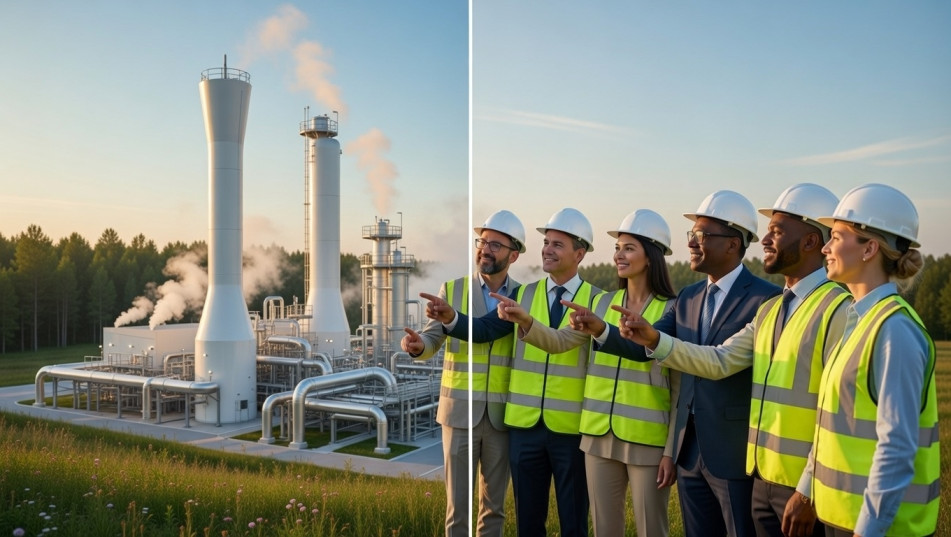
ESG is evolving from compliance to competitive advantage. Companies that treat sustainability as a profit center are pulling ahead.
Carbon capture as revenue
Oil and tech firms are turning captured carbon into jet fuel and concrete. The 45Q tax credit makes projects profitable — Occidental and Microsoft are building massive DAC plants.
Circular economy scales
Apple, IKEA, and Walmart now design for disassembly. Refurbished electronics grew 27% in 2025. Consumers under 40 actively seek circular brands — margins are 12% higher.
AI energy optimization
Data centers are the new factories. Google and Amazon use AI to shave 30% off cooling costs — that’s billion‑dollar savings and a massive emissions cut. Every industry is following.
4. Invisible Infrastructure & Autonomous Ops
Companies are embedding intelligence into physical assets — no screens, just action.
🚜 Autonomous farms & warehouses
John Deere’s autonomous tractor now runs on 70% of large farms. Amazon’s warehouses are 80% robotic by task. The trend is “lights‑out” operations — but only for repetitive tasks; humans manage exceptions.
🏗️ Smart sensors everywhere
From bridges with strain sensors to retail shelves that reorder themselves — IoT spending is up 22%. The data is fed into digital twins, allowing predictive maintenance and zero downtime.
5. The Fluid Workforce: 40% Independent by 2026
Full‑time roles are giving way to project‑based experts. Companies prioritize agility over headcount.
Fractional C‑suite
Fractional CFOs, CMOs, even CAIOs are in demand. Startups and mid‑caps get top talent without full‑time cost.
Gig knowledge workers
Platforms like Upwork and Fiverr now offer AI‑vetted freelancers. 38% of companies say they’ll use more contractors in 2026 for specialized AI projects.
Internal talent marketplaces
Unilever, Schneider Electric use AI to match employees with short‑term projects. Retention up 22% — people want variety.
6. Cyber Resilience — Assume Breach
The mindset shift: not if, but when. Companies invest in rapid recovery and AI defense.
🤖 AI vs. AI
Generative AI attacks are rising. Defenders use AI to detect deepfakes and anomalous behavior in milliseconds. 86% of security leaders call AI their top defense tool.
🛡️ Zero trust matures
Beyond just IT — zero trust now applies to supply chain partners and IoT devices. Identity management spending grew 35%.
💼 Cyber insurance evolves
Premiums stabilize as insurers require basic hygiene (MFA, backups). New policies cover business interruption from AI‑related incidents.
7. Hyper‑Personalization — But With Privacy
Customers expect brands to know them — but not be creepy. The solution: on‑device AI and zero‑party data.
On‑device AI
Apple and Google enable personalized recommendations without sending data to the cloud. Retailers like Starbucks use this for offers that feel private yet relevant.
Conversational commerce
Chatbots that actually remember you — 24/7 service agents that upsell naturally. 44% of consumers made a purchase via chatbot in 2025.
Privacy as personalization
Brands that let users control data see 2x loyalty. “Privacy badges” are the new trust signal.
8. Mental Health & Neuro‑Inclusive Workplaces
Employee wellbeing is now a C‑suite metric, not just an HR program.
🧘 Mental health stipends
71% of large firms offer therapy benefits. Calm, Headspace for Work are standard.
🧠 Neurodiversity hiring
IBM, Dell, and JPMorgan have neurodiverse programs — they report 30% higher productivity in certain roles.
⏳ Asynchronous work
Flexibility is now expected. Companies that mandate 9‑to‑5 lose 40% of candidates.
What This Means for Your Business in 2026
If there’s one thread tying all these trends together, it’s intentionality. Companies aren’t chasing every shiny object; they’re embedding AI, sustainability, and flexibility into their core strategy. The winners? Those who treat technology as a teammate, not a replacement, and who build systems that can bend without breaking.
🔮 2026 action items: Audit your talent model for flexibility, invest in AI literacy from the mailroom to the boardroom, and remember that resilience — whether in supply chains or cybersecurity — is the new growth. The businesses that thrive will be those that adapt faster than the rest, without losing their human soul.