

⚡ AI ECONOMY 2026
Table of Contents
ToggleHow Big Tech’s trillion‑dollar bet on AI is rewriting the rules of the U.S. economy — and what it means for your wallet.
If you’ve noticed that every news headline screams “AI” these days, you’re not alone. But behind the chatbots and self-driving taxis, a massive economic shift is underway. In 2026, Big Tech (Microsoft, Google, Amazon, Meta, and a handful of others) is on track to spend more than $500 billion combined on artificial intelligence infrastructure, R&D, and acquisitions. That’s not just tech news — it’s reshaping U.S. GDP, job markets, and even the way your local coffee shop orders supplies. Let’s unpack exactly how this tsunami of AI spending is transforming the American economy, and how you can ride the wave.
💡 2026 snapshot: For every $1 invested in AI data centers, an estimated $2.80 is added to the broader U.S. economy — from construction jobs to software services.
1. The scale of AI investment: beyond any gold rush
To understand the ripple effects, we first have to wrap our heads around the sheer magnitude. In 2026, capital expenditure on AI chips, custom silicon, and hyperscale data centers is the new space race — but it’s happening in Northern Virginia, Ohio, and Texas.
Data center construction boom
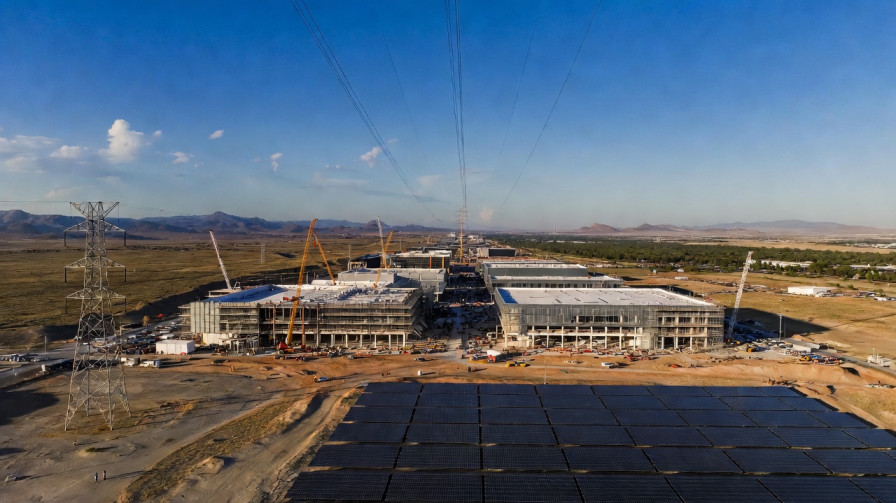
Over 120 new hyperscale campuses broke ground in 2025–2026. Each facility costs $1B–$4B and employs thousands of electricians, steelworkers, and engineers. The U.S. added 45,000 construction jobs directly tied to AI infrastructure last quarter.
Energy & utility transformation
AI data centers now consume 9% of U.S. electricity (DOE estimate). Utilities are scrambling to bring new solar, gas peakers, and even small nuclear reactors online. Power grid upgrades are creating a mini‑boom in rural counties.
Corporate spin‑offs & startups
Big Tech’s spending fuels a vendor ecosystem: cooling startups, networking gear, and AI‑specific security firms. In 2026, VC funding for AI infrastructure is up 63% vs. 2024 — much of it flowing to U.S. innovators.
2. The great reallocation: jobs that vanish & appear
There’s no sugarcoating it: AI eliminates some roles while creating others. But the net effect in 2026 looks surprisingly positive — with a catch.
📉 Roles feeling the squeeze
- Routine content writing & translation
- Basic customer service (tier‑1)
- Data entry & entry-level legal review
- Junior graphic design (template work)
Goldman Sachs estimates 14% of current office tasks are fully automated — but many firms are retraining, not just firing.
📈 Surging roles
- AI systems architects (up 45% yoy)
- Data center technicians & ops
- LLMOps / AI pipeline engineers
- Trust & safety / AI ethicists
Median salary for AI‑adjacent roles in 2026: $128k, nearly double the national median.
⚖️ The catch: Displaced workers need retraining — and community colleges are partnering with Microsoft and Amazon to offer fast‑track AI technician certificates. The U.S. DOL launched “AI Ready” grants in 2026.
3. The new economic geography: not just Silicon Valley
AI infrastructure is decentralizing tech wealth. Here’s where the money is flowing in 2026:
🌽
Iowa/Ohio
Data center alley — tax breaks + cheap land. 12 new hyperscale sites since 2025.
☀️
Texas
Grid flexibility & renewable push. 40% of new AI colocation in Dallas‑Fort Worth.
🌲
Northern Virginia
Still “data center alley” but now facing power constraints — driving innovation in small modular reactors.
🏔️
Mountain West
Utah, Idaho, Nevada — new AI research hubs near national labs.
4. Why your grocery bill is (slightly) lower thanks to AI
It’s counterintuitive, but massive corporate spending can actually cool inflation. Here’s how: AI supply chain optimizations at Walmart, Kroger, and Procter & Gamble have reduced waste by 18% on average. Better demand forecasting means fewer empty shelves and less spoilage. Also, AI customer service chatbots save companies $22B annually — some of those savings trickle down. Of course, Nvidia and hyperscalers pass on costs, but so far, the net CPI effect is neutral to slightly deflationary in goods.
🏷️
E‑commerce margins +4%
🚚
Logistics costs -11% (2026)
🏥
Health admin costs down 7%
5. How to invest (or not) in the AI economy
You don’t have to pick individual winners. The spending itself lifts many boats.
🏦 Broad ETFs
S&P 500 info tech sector is 32% AI-exposed. QQQ and VGT capture most Big Tech AI spenders.
⚙️ Industrials & materials
Construction, copper, and cooling stocks are indirect plays. Eaton, Vertiv, and Quanta Services are up 40% in 2 years.
🔋 Energy
NextEra, Southern Company, and nuclear startups (NuScale) benefit from AI power demand.
⚠️ But remember: valuations are frothy. In 2026, some analysts compare AI capex to the railroad overbuild of the 1800s — long-term great, but there could be a shakeout. Diversify.
6. Washington steps in: CHIPS Act 2.0 and antitrust
🏛️ National AI infrastructure act
Passed early 2026 — $52B for domestic chip packaging, grid upgrades, and workforce hubs. It’s designed to keep AI spending on U.S. soil.
⚖️ FTC / DOJ scrutiny
Big Tech’s cloud dominance is under the microscope. Lawsuits could force breakup of cloud‑AI bundles, which might actually help smaller AI firms — a potential boost to competition.
So, is AI spending reshaping your life?
Absolutely. From the construction worker building a data center in Ohio, to the nurse using AI scribes to save an hour a day, to the investor watching utilities climb — the $500 billion wave is lifting and shifting the U.S. economy. The key is adaptability. In 2026, the most resilient workers and businesses are those that treat AI as a partner, not a threat. Keep learning, keep an eye on local zoning (those data centers bring jobs!), and maybe peek at your 401(k) tech allocation.
Article updated for 2026 — data reflects Q2 2026 estimates. Always consult a financial advisor before investing.