
As of 2026, project management is no longer just about tracking tasks, it’s about orchestrating people, data, and AI in real time.
Remote-first work, asynchronous collaboration, and AI-assisted decision-making have fundamentally changed how teams plan and deliver projects. According to a 2025 Gartner workplace productivity study, over 70% of high-performing teams now rely on cloud-based project management platforms as their “operational backbone,” not just a task list.
But with tools rapidly adding AI, automation, and analytics features, choosing the right platform in 2026 requires more than a feature checklist. It requires understanding how each tool actually supports modern workflows.
This in-depth comparison of cloud-based project management tools for 2026 breaks down:
-
What’s changed since 2025
-
How leading platforms differ in real-world use
-
Which tools work best for different team sizes and industries
What Are Cloud-Based Project Management Tools in 2026?
Updated Definition
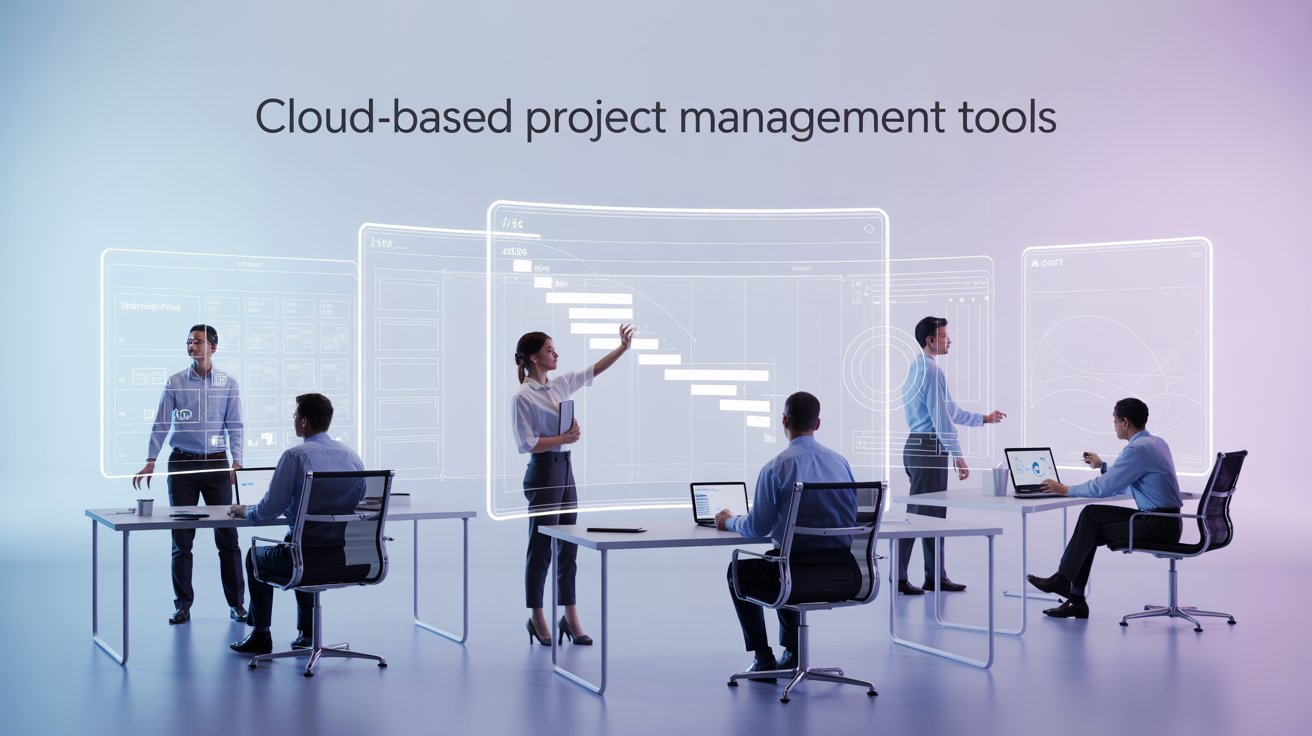
A cloud-based project management tool is a web-hosted platform that enables teams to plan, execute, monitor, and optimize projects using real-time collaboration, automation, and increasingly, AI-driven insights.
Unlike earlier generations of tools, modern platforms now:
-
Predict project risks before delays happen
-
Automate task creation based on behavior
-
Summarize progress using AI copilots
-
Integrate deeply with communication and data tools
Why Cloud-Based Tools Matter More in 2026
Key Advantages (With Real-World Impact)
-
Location-Agnostic Workflows
Teams collaborate across time zones without losing context updates are logged, searchable, and summarized automatically. -
AI-Assisted Decision Making
Tools like ClickUp and Wrike now flag workload imbalance and deadline risk proactively, reducing last-minute firefighting. -
Operational Scalability
Adding users, projects, or departments no longer requires IT intervention. -
Enterprise-Grade Security
Most leading platforms comply with ISO 27001, SOC 2, GDPR, and evolving AI governance standards introduced in 2024–2025. -
Lower Coordination Costs
McKinsey estimates teams waste up to 20% less time on status meetings when using centralized cloud PM tools with AI summaries.
Key Features That Actually Matter in 2026
Instead of generic feature lists, here’s what differentiates tools today:
1. Adaptive Task & Workflow Management
Modern tools adjust workflows dynamically not just boards and timelines, but dependencies, priorities, and ownership based on context.
2. Embedded Collaboration (Not Add-Ons)
Comments, mentions, file previews, and approvals happen inside tasks, reducing reliance on email and chat overload.
3. AI Summaries & Predictive Alerts
AI-generated standups, risk alerts, and progress reports are now standard especially valuable for managers overseeing multiple projects.
4. Integration Depth (Not Quantity)
The best tools integrate deeply with Slack, Microsoft Teams, Google Workspace, CRM systems, and time tracking not just surface-level syncing.
5. Customization Without Complexity
Tools that allow flexible workflows without forcing heavy configuration win adoption battles in 2026.
Cloud-Based Project Management Tools Compared (2026 Edition)
1. Asana
Best for: Structured teams prioritizing clarity and accountability
Asana remains a strong choice in 2026 for teams that want clear task ownership and predictable workflows. Its AI enhancements now summarize project health and highlight blockers automatically.
Why it works:
Asana excels at preventing work from falling through the cracks, especially in cross-functional teams.
Pros
-
Clean interface with minimal friction
-
Strong timeline and dependency management
-
Excellent onboarding experience
Cons
-
Advanced analytics still gated behind paid tiers
-
Less flexible than ClickUp for highly custom workflows
2. Monday.com
Best for: Teams that need automation and customization
Monday.com has doubled down on no-code automation, making it popular in operations-heavy environments like marketing, HR, and client services.
Monday.com vs Asana (2026 Insight)
-
Monday.com → More customizable, automation-first
-
Asana → Simpler, more opinionated structure
Pros
-
Highly visual dashboards
-
Strong automation templates
-
Broad industry use cases
Cons
-
Pricing escalates quickly with advanced features
-
Can feel overwhelming for small teams
3. Trello
Best for: Small teams and lightweight project tracking
Trello remains intentionally simple. In 2026, it survives not by competing with AI-heavy tools, but by staying frictionless.
Why teams still use it:
For straightforward workflows, Trello is faster than “do-it-all” platforms.
Pros
-
Extremely intuitive
-
Generous free plan
-
Ideal for visual thinkers
Cons
-
Limited reporting and forecasting
-
Not suitable for complex, multi-layer projects
4. ClickUp
Best for: All-in-one project and productivity management
ClickUp has emerged as one of the most feature-dense platforms in 2026. Its AI copilots generate summaries, assign tasks, and suggest optimizations.
Expert perspective:
ClickUp is powerful but teams that succeed with it invest time in setup.
Pros
-
Deep customization
-
Built-in docs, goals, time tracking
-
Competitive pricing for feature depth
Cons
-
Learning curve for new users
-
Overkill for simple workflows
5. Wrike
Best for: Enterprise and marketing teams
Wrike’s strength lies in governance, reporting, and scale. Its AI risk prediction is especially useful for complex portfolios.
Why enterprises choose Wrike:
It balances flexibility with strict access controls.
Pros
-
Advanced analytics and Gantt charts
-
Enterprise-grade security (SSO, MFA)
-
Strong approval workflows
Cons
-
Higher pricing
-
Setup requires planning
6. Notion
Best for: Startups and creative teams
Notion in 2026 acts more like a modular workspace than a traditional PM tool. It shines when teams want documentation, tasks, and knowledge sharing in one place.
Notion vs ClickUp
-
Notion → Flexibility, creativity
-
ClickUp → Structure, automation
Pros
-
Highly customizable databases
-
Strong documentation features
-
Vibrant template ecosystem
Cons
-
Limited native analytics
-
Relies on integrations for automation
7. Smartsheet
Best for: Data-driven and operations-heavy teams
Smartsheet continues to attract teams transitioning from Excel by offering structured control with cloud automation.
Pros
-
Familiar spreadsheet-style UI
-
Strong reporting and dashboards
-
Excellent for regulated industries
Cons
-
Less intuitive for creative teams
-
No free plan
Project Management Tools Comparison Table (2026)
Tool |
Best For |
Standout Strength |
AI/Automation (2026) |
Free Plan |
Ideal Team Size |
|---|---|---|---|---|---|
Asana |
Structured workflows & task clarity |
Reliable task dependencies + timelines |
AI project health alerts, automation rules |
Yes (limited) |
Small → Mid teams |
Monday.com |
Flexible automation workflows |
Highly customizable boards + no-code automations |
AI suggestions for work assignments, automations |
Yes (limited) |
Small → Enterprise |
Trello |
Visual & lightweight task tracking |
Drag-and-drop Kanban simplicity |
Basic automation (Power-Ups + Butler) |
Yes (free/basic) |
Solo → Small teams |
ClickUp |
All-in-one productivity suite |
Deep customization & views |
Advanced AI copilots + automated summaries |
Yes (robust) |
All sizes |
Wrike |
Enterprise reporting & scale |
Rich dashboards + risk prediction |
AI-driven analytics & alerts |
Limited/free tier |
Mid → Large teams |
Notion |
Flexible workspace + docs |
Database + notes + tasks in one |
Emerging AI content/summary tools |
Yes (good) |
Small teams, startups |
Smartsheet |
Data-centric project planning |
Spreadsheet-style control + automation |
Predictive rules + advanced reporting |
No free tier |
Mid → Enterprise |
How to Choose the Right Tool in 2026
1. Match Tool Complexity to Team Maturity
Advanced platforms fail when teams don’t need — or won’t use — their power.
2. Think in Systems, Not Features
Choose tools that integrate into your existing ecosystem (email, chat, CRM).
3. Measure ROI Beyond Price
Factor in:
-
Reduced meetings
-
Faster onboarding
-
Fewer missed deadlines
4. Test With Real Projects
Free trials are only useful if you run actual workflows, not demos.
Emerging Project Management Tools Trends (2026)
-
AI as a Copilot, Not a Controller
The best tools assist decisions rather than replace judgment. -
Predictive Workload Management
Tools increasingly forecast burnout and delays. -
Asynchronous-First Collaboration
Less real-time chat, more contextual updates. -
Stronger Data & AI Governance
Compliance around AI-generated insights is becoming standard.
Frequently Asked Questions (2026)
What is the best cloud-based project management tool in 2026?
There’s no single best tool ClickUp and Monday.com lead for power users, while Asana and Trello excel in simplicity.
Are cloud-based project management tools safe for sensitive data?
Yes, most leading platforms now meet global compliance standards and AI governance requirements introduced in 2024–2025.
How many tools should a team use?
High-performing teams typically rely on one primary PM tool, supported by communication and automation integrations.
Conclusion
In 2026, cloud-based project management tools are no longer optional they are strategic infrastructure.
The right platform reduces friction, surfaces risks early, and allows teams to focus on meaningful work instead of coordination overhead. Whether you choose the simplicity of Trello, the structure of Asana, or the power of ClickUp or Wrike, success depends on alignment between tool capability and team behavior.
This comparison of cloud-based project management tools for 2026 is designed to help you choose not just what’s popular but what actually works for your workflow today and scales for tomorrow.